
Free shipping on all orders over US$50
Dracaena Draco Seeds (Dragon Tree Seeds)
Dracaena Draco Seeds (Dragon Tree Seeds)
Unsual tree! Slow growing, be patient!
Delivery
All orders shipped with UPS Express.
Always free shipping for orders over US $250.
All orders are shipped with a UPS tracking number.
Returns
Items returned within 14 days of their original shipment date in same as new condition will be eligible for a full refund or store credit.
Refunds will be charged back to the original form of payment used for purchase.
Customer is responsible for shipping charges when making returns and shipping/handling fees of original purchase is non-refundable.
All sale items are final purchases.
Help
Give us a shout if you have any other questions and/or concerns.
Email: contact@domain.com
Phone: +1 (23) 456 789
Availability: In stock
SKU
Dracaena Draco
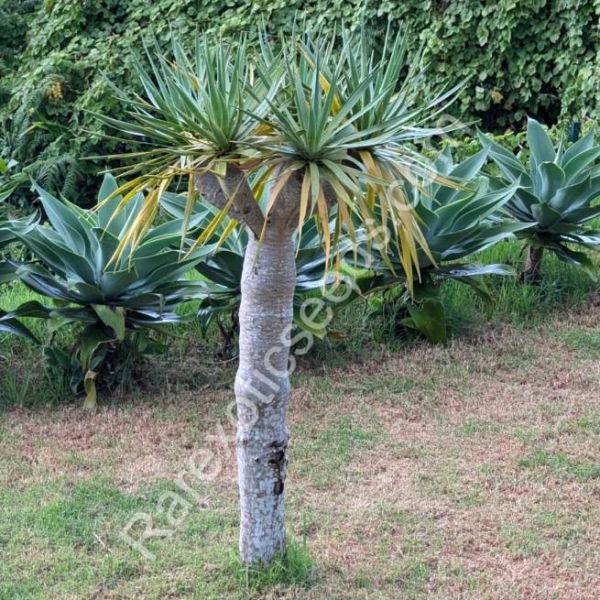
Dracaena draco, commonly known as the Dragon Tree, is a legendary species native to the Canary Islands, Madeira, and parts of Cape Verde. This slow-growing, long-lived tree is admired for its dramatic umbrella-shaped canopy, thick grey trunk, and stiff, blue-green leaves arranged in dense rosettes.
One of the most remarkable features of the Dragon Tree is its red resin, traditionally called “dragon’s blood.” Historically used in medicine, varnishes, and dyes, this resin adds a mystical aura to the plant's already unique presence. The tree's name stems from ancient legends associating the red sap with the blood of dragons.
Dracaena draco thrives in warm, dry climates and is particularly well-suited for Mediterranean, subtropical, or xerophytic gardens. It also adapts well to container culture in cooler regions, where it can be overwintered indoors. Germination requires warmth and patience, but the reward is a truly iconic specimen plant.
Highly prized by collectors and landscape designers, the Dragon Tree is more than a curiosity — it's a living sculpture that adds an exotic and timeless character to any setting.
| Common name | Canary Islands Dragon Tree |
|---|---|
| Species | Dracaena draco |
| Germination | Seeds have hard shells and should be carefully scarified, chipped or filed to assist germination. Place in an area in direct sunlight for most of the day. Keep compost moist but not soaking wet. Germination should occur within 2 months but it can take longer, don't give up. |
| Scarification / Stratification | Seed coats may be so hard that they are impermeable to water. They need to be scratched or broken using a knife or sandpaper, in order to germinate. Chip the seeds with a sharp knife or make a few swipes with a sharp edged file or use sandpaper to allow moisture being more readily absorbed. |
| Price View | Price Range |